

How Long Do Carbon Monoxide Detectors Last?
Most carbon monoxide detectors last five to seven years, depending on the sensor type. After this point, sensor effectiveness degrades, and replacement is required, regardless of whether the unit appears to be functioning normally or continues to pass a basic test.
Carbon monoxide alarms are one of the most important safety devices in your home. Your home contains many potential sources of carbon monoxide (CO), including furnaces, water heaters, and fireplaces, all fuel-burning appliances that can silently release dangerous levels of CO without any visible warning. A functioning CO alarm is your family's first line of defence.
At PasWord Protection, we've been serving homes and businesses across the Golden Horseshoe for over 60 years. We've seen firsthand what happens when CO alarms age past their effective life and fail to alert homeowners in time.
We're here to help you understand carbon monoxide detector lifespan and when replacement is required, so you can keep your home and loved ones protected year-round.
What is a Carbon Monoxide Detector Lifespan?
A carbon monoxide detector's lifespan is typically five to seven years. After this period, sensors degrade naturally and can no longer reliably detect CO in the air, even if the CO alarm still powers on, beeps when tested, or displays a normal reading.
The National Fire Protection Association (NFPA) recommends replacing CO alarms according to the manufacturer's instructions, and most manufacturers set the expiration window at five to seven years from the manufacturer's date.
Should You Change CO Detectors Even When They’re Working?
This is the most important thing homeowners miss: an alarm that appears to be working properly could also be at the end of its life. The internal electrochemical sensor, which responds to CO gas and triggers the alarm, has a finite service life that no amount of battery replacement or cleaning can extend.
When the alarm reaches the end of its sensor life, the only safe option is
to replace it.
Pro tip:
Always check the
manufacturer's instructions for your specific model; some devices may have a slightly shorter or longer end of life depending on sensor type, brand, and the environment in which they are installed.
The Dangers of Carbon Monoxide in Your Home
Carbon monoxide is an invisible, odourless gas (known as the silent killer) that forms when fuel-burning appliances do not combust completely.
Because CO has no detectable smell or colour, you cannot sense its presence without a functioning CO alarm. The NFPA notes that CO alarms are the only reliable way to detect elevated CO levels before they reach dangerous concentrations in the home.
Common sources of carbon monoxide CO in the home include:

Image source: Gemini 2026
How Does CO Poisoning Occur?
Carbon monoxide poisoning occurs when CO binds to hemoglobin in the bloodstream, preventing oxygen from circulating through the body. Early symptoms of CO poisoning include headache, dizziness, fatigue, and nausea, all of which are commonly mistaken for the flu.
What makes co poisoning particularly dangerous is that
symptoms often worsen during sleep, when you’re least likely to notice them. This is why having a functioning CO alarm adjacent to every sleeping area is not just a legal requirement in Ontario; it can be the difference between waking up and not waking up at all.
If your CO alarm sounds, leave the home immediately, get fresh air, and call 9-1-1 before re-entering.
Ontario's Carbon Monoxide Detector Requirements
Ontario law takes CO safety seriously. These requirements regarding placement and models apply for full compliance with Ontario laws.
Every Storey Adjacent and Sleeping Area
Under the Ontario Fire Code, CO alarms are required on every storey of a home and adjacent to each sleeping area. This means a two-storey home with bedrooms on the upper floor needs a CO alarm on both floors, including one near or outside the bedroom or sleeping area where occupants sleep.
Across Canada, similar requirements exist at the provincial level, but
Ontario's rules are among the most specific regarding placement near sleeping areas.
Homes with Fuel-Burning Appliance or Attached Garage
The
Ontario Building Code also
requires CO alarms to be installed in any home that contains a fuel-burning appliance or an attached garage. Compliance is a must, and having alarms installed in the wrong locations or in units past their end of life can leave your family unprotected and your home non-compliant.
Standard Device Model
A carbon monoxide alarm must comply with either CSA-6.19, “Residential Carbon Monoxide Alarming Devices,” or UL 2034, “Single and Multiple Station Carbon Monoxide Alarms,” and meet the listed standard requirements.
If you’re unsure whether your CO detectors meet Ontario requirements, PasWord Protection can assess your home and ensure every alarm is correctly placed and fully functional.
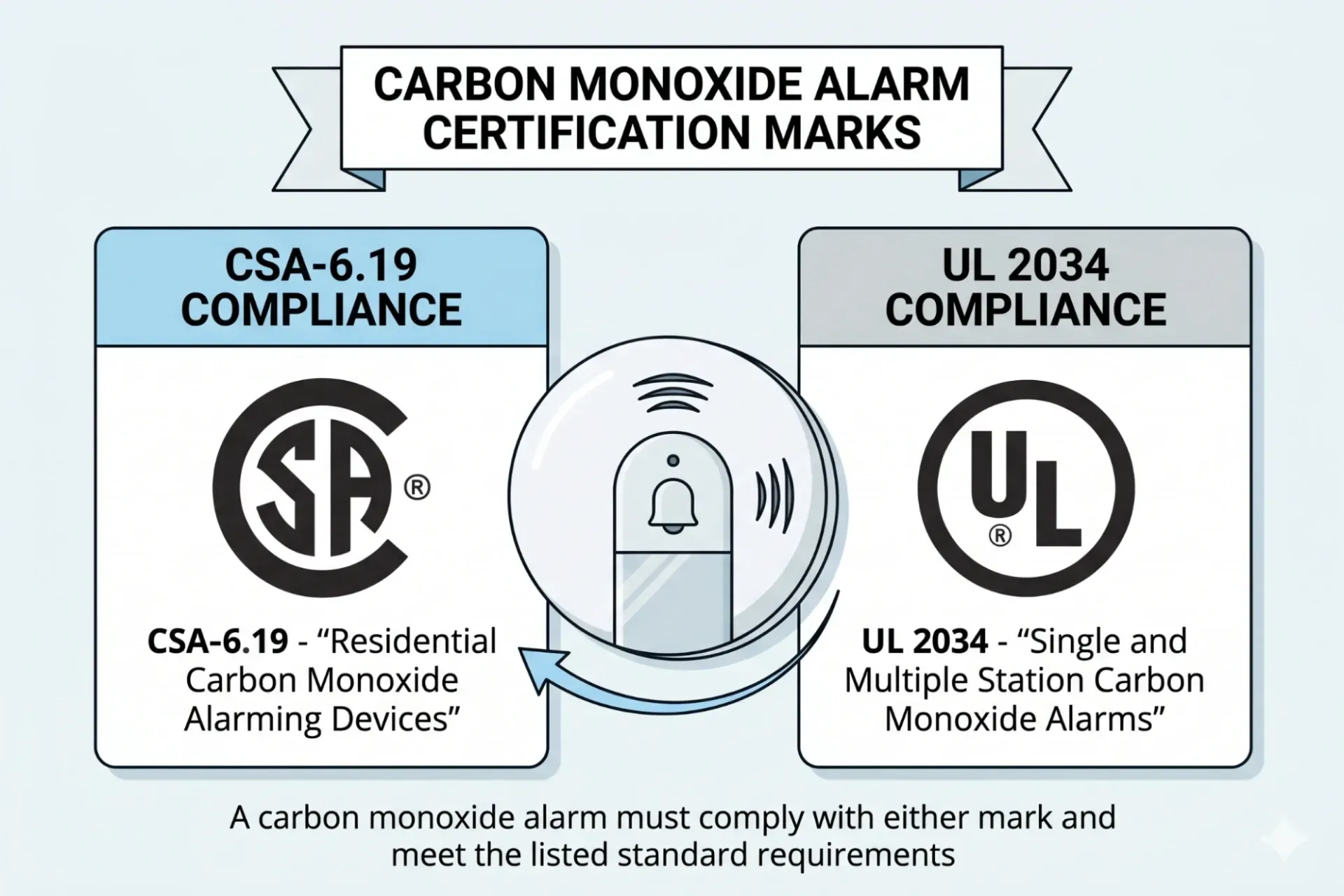
Image source: Gemini 2026
How Long Do Carbon Monoxide Detectors Last by Sensor Type?
CO alarms come in different sensor types, each with a varying lifespan. Here's a breakdown of carbon monoxide alarm life expectancy by sensor type:
Electrochemical Sensors
This is the most common type found in residential CO alarms. Each electrochemical sensor is precisely calibrated to detect elevated CO levels by measuring precise ppm (parts per million) levels in the air. Over time, the ability to accurately determine ppm levels degrades, which is why these sensors typically reach end of life at the five- to seven-year mark.
Biomimetic Sensors
These use a
gel that changes colour when it absorbs CO. Less common in standard home detectors, biomimetic sensors may have a
lifespan comparable to or slightly longer than that of standard home detectors but should still be replaced per the manufacturer's instructions.
Metal Oxide Semiconductor Sensors
Often found in
combination smoke and CO alarms, these can be
sensitive to heat and environmental changes, which
may affect how long the alarm remains reliable.
Regardless of sensor type, the rule applies the same way: once the alarm has reached the end of its useful life, replace it.
Signs Your CO Alarm Needs to Be Replaced
Regardless of the type, knowing when to replace carbon monoxide detector units is not always as obvious as a visible crack or a dead battery. Here are the key signs to watch for:
- End-of-life signal: Most modern CO alarms emit a
distinct beeping pattern, different from a low-battery chirp,
when the alarm has reached the end of its service life. Some models will display an "End" or "Err" message on a digital display.
Check your manufacturer's instructions for what this signal looks like on your device. - Age over five years: If you’re unsure how old your CO detectors are, check the manufacturer's date on the back of the unit.
If the carbon monoxide detector replacement age has passed, or if you cannot find a date at all, replace the unit
now.
Many alarms expire quietly without any visible indication, which is why checking the expiration date matters as much as testing the device. - False alarms or failure to test: A CO alarm that triggers without cause, fails to respond to the test button, or behaves inconsistently indicates it needs to be replaced immediately.
- Physical damage: Discolouration, visible damage, or moisture exposure around the unit are indicators that the device may no longer be functioning properly.
- Recently moved in: If you've just moved into a home,
don’t assume the CO alarms were recently installed. Check the manufacturer's date and replace any CO alarm that is at or near the end of its life.
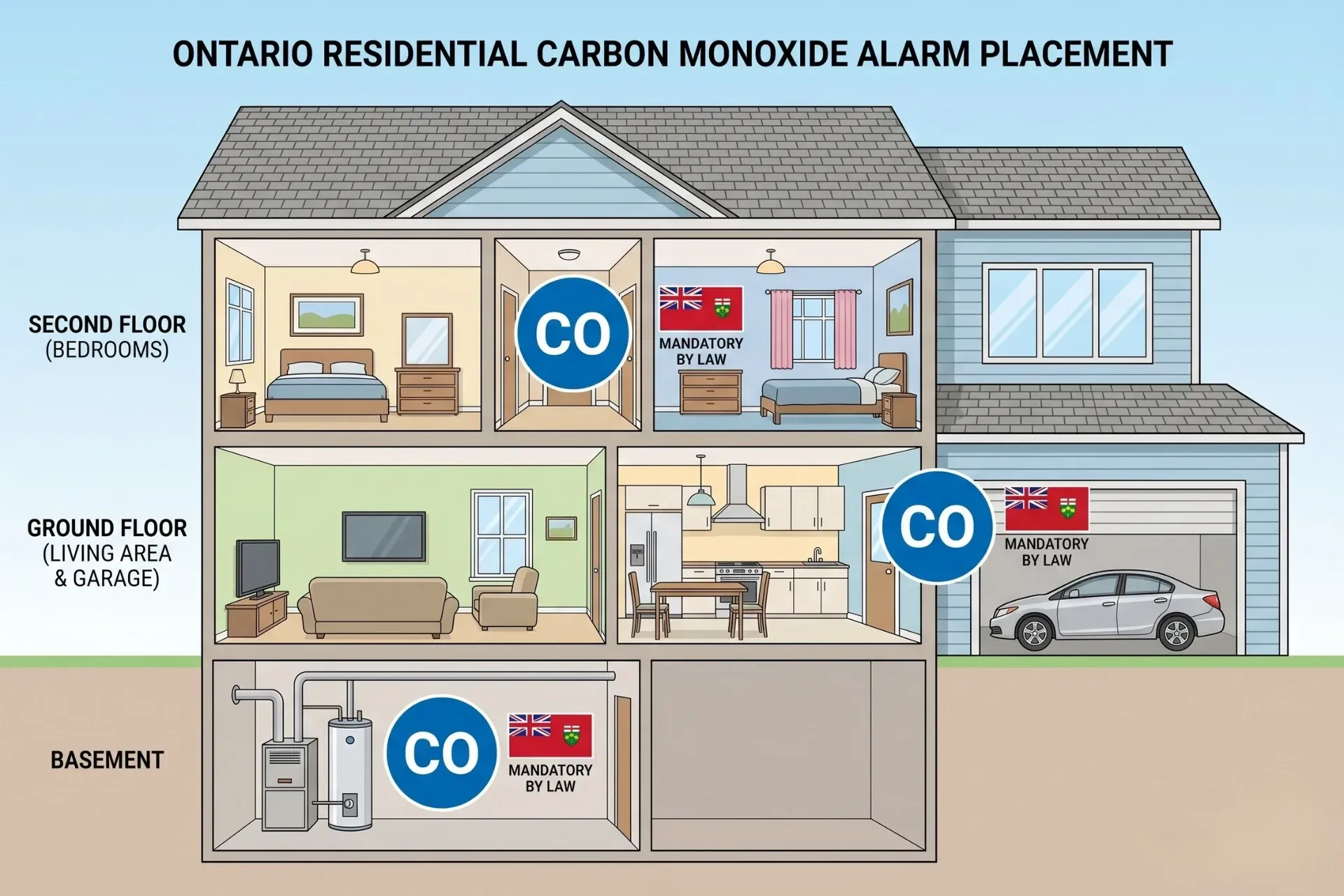
Image source: Gemini 2026
How to Keep Your CO Alarms Working Properly
Replacing your CO detectors on schedule is essential, but regular maintenance helps ensure each CO alarm performs at its best throughout its service life.
- Test detectors monthly: Press the test button on each CO alarm each month to confirm it responds and functions. If it doesn’t respond to the test button,
replace it immediately.
- Change batteries regularly: Most battery-powered CO alarms require fresh batteries at least once a year. For sealed, long-life battery models, follow the manufacturer's instructions; these units may require a full replacement when the battery life ends, rather than a simple battery swap.
- Vacuum the vents: Dust and debris can accumulate around the sensor vents, interfering with a CO alarm's ability to detect CO accurately. Gently vacuum the exterior of each unit every few months.
- Keep airflow clear: Avoid placing furniture, curtains, or other objects in front of CO alarms. Blocked airflow reduces a CO alarm's ability to sample the surrounding air and detect CO poisoning before it becomes a crisis.
- Inspect for wear: Periodically check each unit for physical damage, discolouration, or signs of heat or moisture exposure, all of which can shorten the device's effective life.
By staying consistent with this routine, you extend the useful life of your CO detectors and ensure they remain working properly right up until it’s time for replacement.
Choosing the Right CO Alarm for Your Home
When replacing expired CO detectors, selecting the right type of CO alarm ensures your home gets the best protection available. Here are the main options:
- Battery-powered CO alarms: Portable and affordable, these are easy to install in any room without an outlet. They require regular battery changes to remain working properly.
- Plug-in models with battery backup: These draw power from a wall outlet but include batteries as a backup during power outages. A reliable option for bedrooms and hallways near a sleeping area.
- Interconnected CO alarms: When one CO alarm sounds, all connected alarms in the home sound simultaneously. This is especially important for larger homes where a co alarm in the basement might not be audible from a second-floor sleeping area or bedroom.
- Smart CO detectors: Wi-Fi-enabled CO alarms send real-time alerts directly to your smartphone, so you know immediately if a CO alarm activates at home while you’re away. This pairs seamlessly with PasWord's
24/7 monitoring services.
- Combination smoke and CO alarms: These combo smoke and CO units detect both smoke and carbon monoxide CO in one device. They’re a practical choice for reducing the number of devices installed throughout your home while maintaining full protection.
Look for models certified by Underwriters Laboratories of Canada (ULC) to ensure they meet Ontario's residential-use standards.
Pro tip: Check your
smoke detector’s lifespan, too, to keep both types of alarms up to date.
FAQs About CO Detectors
How long do carbon monoxide detectors last?
Most CO alarms last five to seven years, depending on the sensor type and environmental conditions. After this point, the internal sensor degrades, and the alarm can no longer reliably detect CO, even if it still powers on. Always check the manufacturer's date on the back of the unit.
What is the lifespan of a carbon monoxide detector?
The standard lifespan of a carbon monoxide detector is five to seven years for electrochemical sensor models, which are the most common type found in residential homes. Some models may vary slightly, so always consult your manufacturer's instructions and replace on schedule.
How do I know if my carbon monoxide detector is expired?
Check the manufacture date printed on the back or side of the unit. If it’s more than five to seven years old, replace it. Many CO alarms emit a specific end-of-life beeping pattern or display an error code when they reach the end of their service life.
How do I know if my carbon monoxide detector is dying?
A CO alarm nearing the end of its life may chirp or beep in a pattern different from a low battery warning, fail to respond to the test button, or trigger false alarms. If your CO alarm is displaying any of these signs, don’t wait; replace it now.
When should I buy a new carbon monoxide detector?
Replace your CO alarm every five to seven years, or sooner if it shows signs of malfunction, physical damage, or has triggered an end-of-life signal. If you have recently moved into a home and cannot verify the age of the existing CO alarms, replace them as a precaution.
Key Takeaways
- Most CO alarms have a carbon monoxide detector lifespan of five to seven years, after which sensor degradation makes replacement necessary, regardless of how the unit appears to function.
- Ontario Fire Code requires CO alarms on every floor and adjacent to every sleeping area; proper placement is a legal requirement, not optional.
- An alarm that beeps differently than usual, fails the test button, or displays an end-of-life message needs to be replaced immediately.
- PasWord Protection offers professional installation, ULC-certified CO alarms, and 24/7 active monitoring so your home is protected even when you are not there.
PasWord Protection: Your Partner in Carbon Monoxide Safety
At PasWord Protection, we go beyond standard security systems to offer comprehensive environmental hazard detection for homes across the Golden Horseshoe. Our team ensures every CO alarm and smoke alarm in your home is properly placed, correctly installed, and actively monitored around the clock.
Here is what sets us apart from other providers:
- Expert installation: Our technicians strategically place CO detectors and smoke alarms in every required location for maximum protection.
- Top-quality devices: We use ULC-certified carbon monoxide alarms, smoke alarms, water leak sensors, and temperature detectors to provide layered, whole-home protection.
- Seamless integration: We integrate your CO detectors with your existing PasWord security system, so all hazard alerts flow through a single, streamlined platform.
- 24/7 active monitoring: Our monitoring team is always on standby. If a CO alarm activates at your home, we will act immediately, contacting you and, if necessary, dispatching emergency services. This proactive approach means we do not wait for you to call us.
- Real-time alerts: Receive instant notifications on your smartphone the moment any CO alarm or smoke alarm in your home is triggered, wherever you are.
We take your safety seriously. Don't wait until a CO alarm reaches the end of its life, or worse, fails silently.
Contact PasWord Protection today for a
free consultation and let us help you build a safer home for your family.