
Best Video Surveillance: Remote Video Monitoring vs 24/7 On‑Site Guards
Signing up for remote monitoring solutions generally delivers more value than hiring security guards. They offer lower costs as they do not require keeping on-site staff on payroll. Monitoring stations work independently. They’ll only reach out to you after verifying a potential threat.
When it comes to around-the-clock surveillance, you generally have two options: remote video monitoring and 24-hour on-site guards. A professionally installed monitoring system is more affordable.
However, you’ll also be responsible for reviewing the live feeds from your security cameras, motion detectors, and smart devices. Alternatively, the total cost of hiring security guards adds up annually, but you can offload the entire monitoring process.
To help you choose which approach gives you the best value for your money, let’s weigh the pros and cons. Your risk profile heavily depends on your property type. Here’s everything you should know before signing up for a professionally monitored security system.
Remote Video Monitoring vs. On-Site Security Guards: Cost, Coverage, and Performance
Comparing remote video monitoring and on-site security guards only makes sense when you evaluate them under the same conditions. Yes, they both help deter theft. However, each approach has different cost structures, coverage limits, and performance consistency.
Let’s break down several factors you need to consider:
| Factor |
Remote Video Monitoring |
On-Site Security Patrol |
|---|---|---|
| Security Cost (Typical Range) |
Fixed monthly fee, generally lower and predictable |
Hourly wage × daily hours × number of guards |
| Additional Costs per 24/7 Coverage (Same Site) |
One monitoring centre can cover multiple outdoor security cameras continuously |
Requires multiple guards to cover shifts, breaks, and overtime |
| Coverage Area |
Multiple surveillance cameras across large areas simultaneously |
Limited to where the guard is physically present |
| Detection Method |
Motion analytics, video verification, alarm triggers |
Human observation and patrol routines |
| Escalation Capability |
Direct coordination with owners and emergency services |
Guard must manually assess and initiate escalation |
| False Alarm Monitoring |
Filtered through verification protocols |
Subjective judgment by individual guards |
| Evidence Quality |
Timestamped video clips, logs, continuous recording, good video quality, and alarm data |
Incident reports and witness statements |
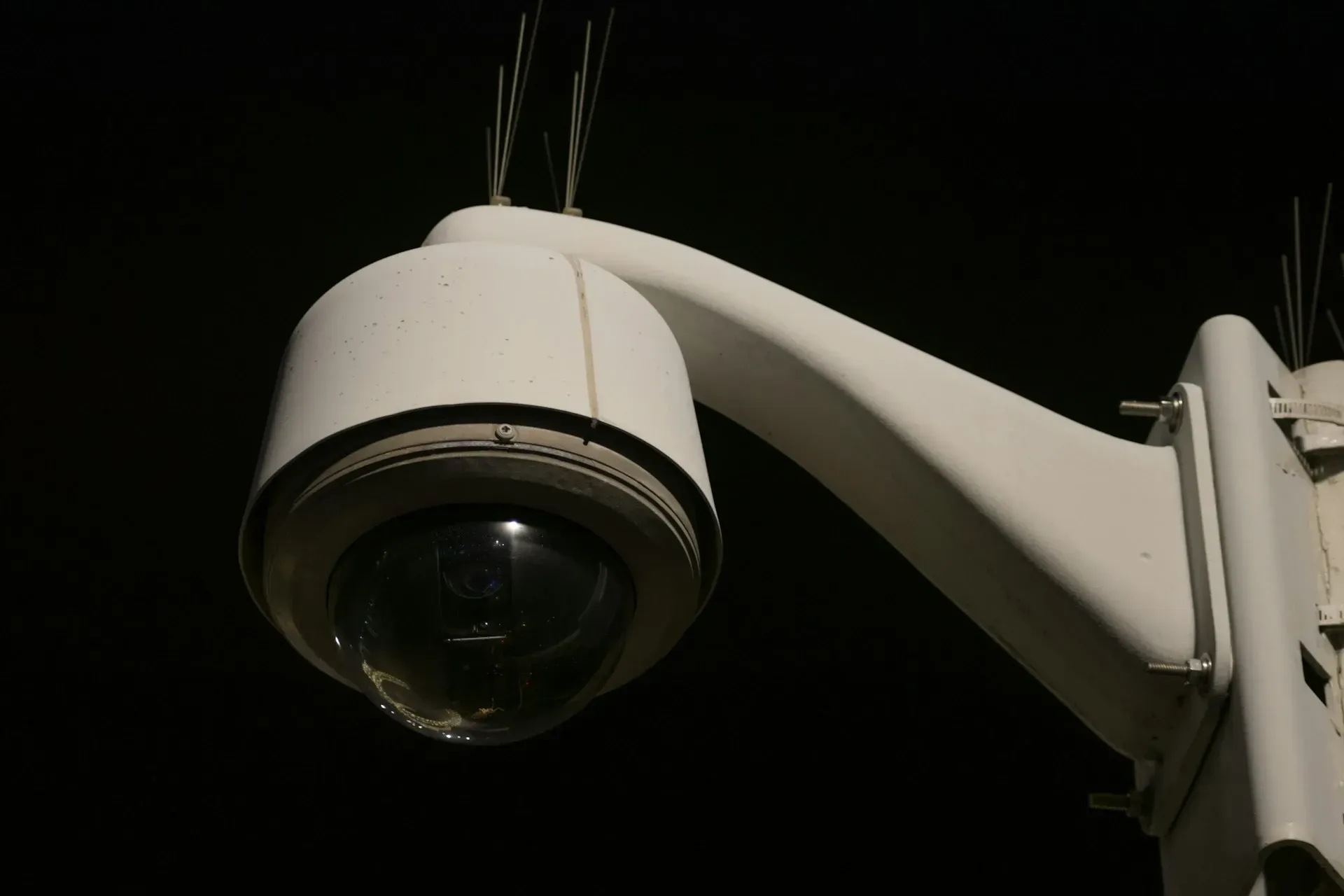
Source:
Unsplash
How Remote Video Monitoring Handles Threat Detection and Escalation
Getting a security monitoring system installed is just the first step. When you receive alerts, note that most of them won’t actually consist of threatening events. In fact, reports indicate that more than 90% of intrusion alerts are false alarms. Incorrect codes, faulty arming, and environmental factors can trigger your sensors and send alerts to your phone.
Do you need to
manage and reduce false alarms yourself? Not necessarily. You can keep your space safe and secure without self-monitoring by working with a security expert. Here’s how professional threat detection and escalation work:
- Motion analytics, alarm triggers, and live camera feeds work together to confirm real threats.
- Operators visually assess events before taking action.
- Wireless security cameras, networks, and power sources are continuously checked for downtime.
- Verified incidents trigger immediate contact with property owners, keyholders, or emergency services.
- Centralized monitoring eliminates errors caused by slow response times.
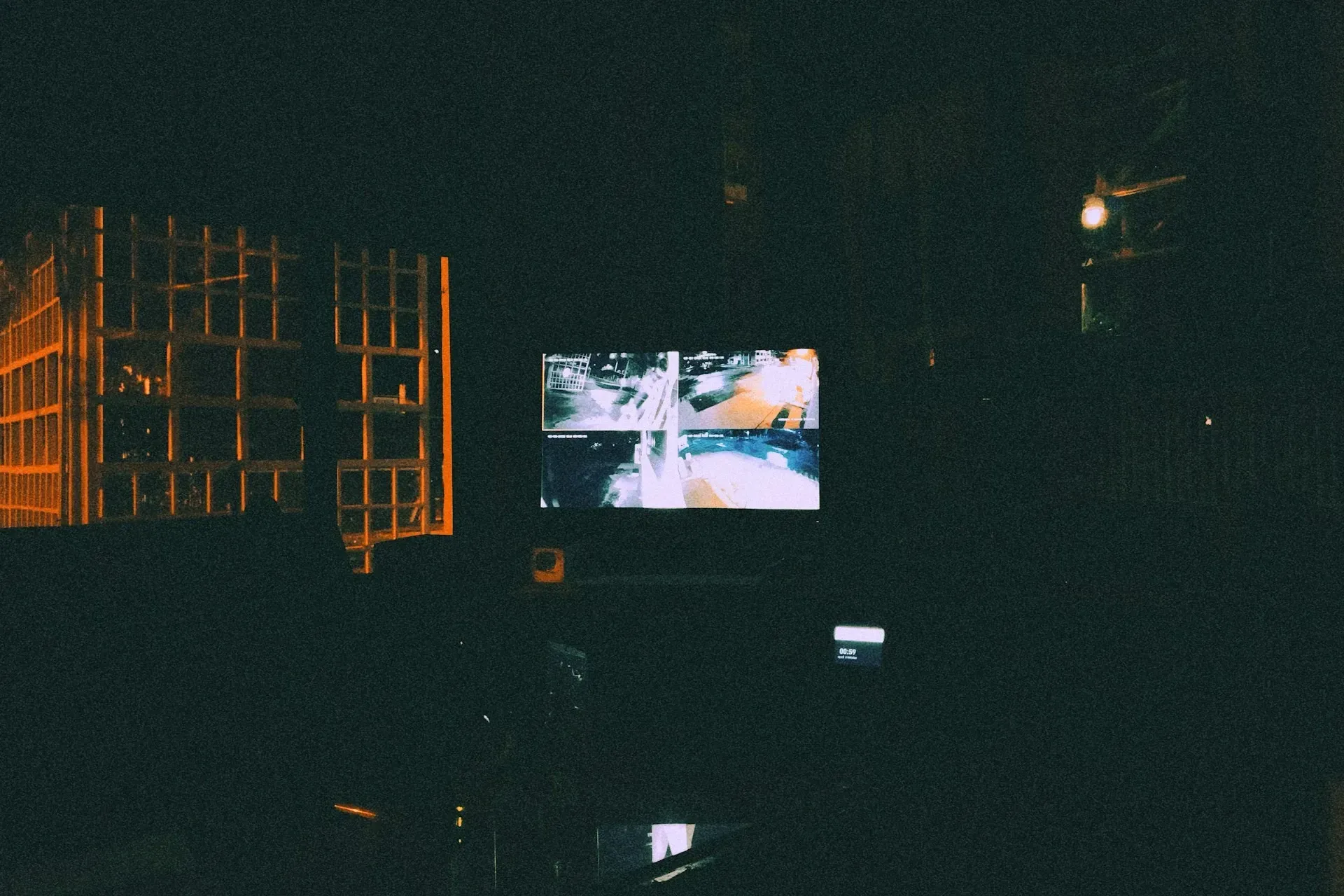
Source:
Unsplash
FAQs About CCTV and Security for Your Home or Business Space
What is the professional installation cost for security cameras?
Security camera installation for homes typically costs $200-$1,500, depending on the number of cameras, their types, installation complexity, and additional security features (such as night vision, motion detection, smart home integration, etc.). Commercial CCTV installation generally costs more due to the larger area requiring coverage and the advanced features needed.
What are the different types of surveillance?
There are several types of surveillance, including the following:
- CCTV (closed-circuit television): Fixed, PTZ, or wired cameras that record video locally or to the cloud storage for review.
- Remote video monitoring: The outdoor cameras are actively monitored and verified by trained operators in a monitoring center.
- Motion-based surveillance: These sensors are triggered by movement, not recorded objects.
- Access control systems: Set varying permission levels for each user in your organization.
- Environmental monitoring: When paired with outdoor and indoor cameras, it can detect flooding, smoke, temperature spikes, or equipment failure.
What is smart security installation and surveillance?
Smart security installation and surveillance systems use network-connected cameras, sensors, and control systems to analyze security data in real-time. They usually rely on IP connectivity, cloud or on-prem platforms, and software-based analytics. Unlike traditional CCTV, smart security tools enable remote access, event logging, automated alerts, and system health monitoring.
Can burglars disable wireless alarms?
Unfortunately, yes. Wireless systems can be vulnerable to signal jamming, power disruption, or network interference. You need to monitor them constantly for these reasons. You can mitigate these risks by using cellular backup, encrypted signals, layered security, and battery redundancy.
In Summary
- Remote video monitoring and on-site guards solve similar problems; their costs and coverage are very different.
- Remote monitoring delivers continuous oversight across wide areas without fatigue, patrol gaps, or shift limitations.
- Professional monitoring reduces false alarms by proactively verifying events instead of reacting to every trigger.
- On-site guards add value where physical intervention is required, but costs rise quickly for 24/7 coverage.
- For many homes and commercial properties, remote video monitoring offers stronger consistency, faster escalation, and better long-term value.
Get the Best Video Surveillance System for Your Home or Business
Don’t compromise on safety. At PasWord Protection, we offer a comprehensive commercial or home security system that combines remote access control with proactive security measures. We’ll install a customized setup that delivers instant alerts and clear video footage, while our specialists verify events in real time.
Our team has your back 24/7. Should an emergency arise, our team will contact you immediately and coordinate with the necessary emergency services. Rest assured, you’re in capable hands.
How much does a security camera monitoring service cost? Call us today for a
free estimate. We’ll assess your security needs and show how we can
close security gaps and strengthen your overall setup.